Rich Sugar-Free Chocolate Birthday Cake That’s Actually Moist (With Fudge Frosting)
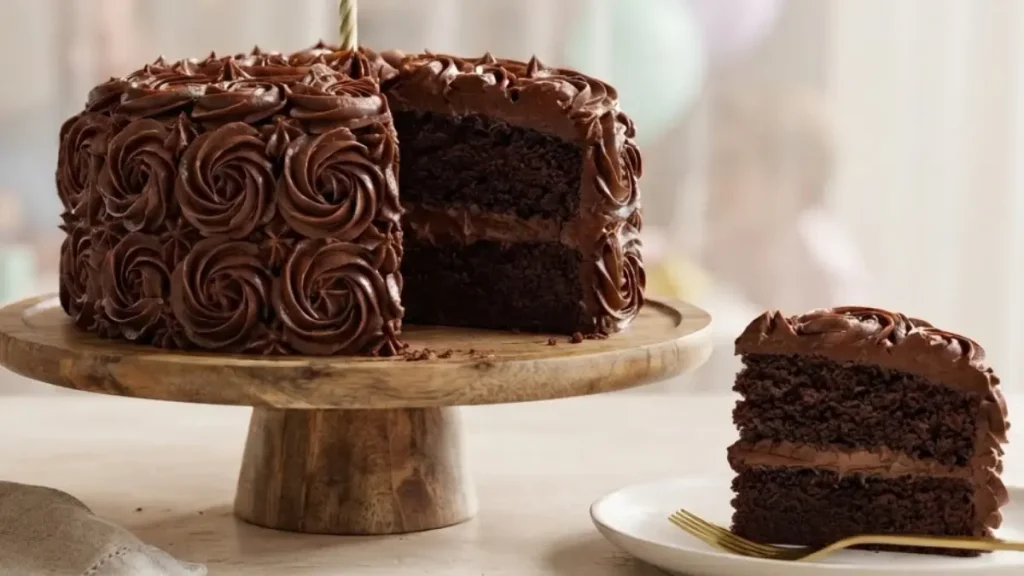
The first sugar-free chocolate cake I baked came out dry and a little bitter, and my family politely ate one slice each. The fix was two small changes: I poured hot coffee into the batter, and I added sour cream. The coffee wakes up the cocoa, and the sour cream keeps the crumb soft even with a sugar substitute. Now this is the cake I bake for every birthday, and nobody asks if it’s “the healthy one.”
Recipe Highlights
- Naturally Sweetened: Sweetened with monk fruit, with no refined sugar.
- Moist & Tender: Extra-moist crumb that stays soft for days.
- Deep Flavor: Deep chocolate flavor from cocoa powder and hot coffee.
- Rich Frosting: Silky fudge frosting made with sugar-free dark chocolate.
- Easy to Bake: Simple pantry steps with no special baking skills needed.
Key Ingredients Breakdown
Unsweetened Cocoa Powder
Cocoa gives the cake its deep chocolate flavor. Since there’s no sugar to round it out, a good-quality cocoa matters here. Dutch-process cocoa makes a darker, smoother cake. Natural cocoa works too and gives a slightly sharper taste.
Granular Monk Fruit Sweetener
This replaces sugar and gives sweetness without raising blood sugar for most people. Use a blend made for baking that measures cup for cup like sugar. Allulose blends also work and stay softer. Pure monk fruit drops will not work, because the cake needs the bulk of a granular sweetener.
All-Purpose Flour
Flour builds the structure of the cake. Measure it carefully, because too much makes the cake dry. For a lower-carb version, a 1:1 gluten-free or almond-and-coconut blend can work, though the texture will be denser.
Eggs
Eggs bind the batter and help the cake rise. Use room-temperature eggs so they mix in smoothly. For an egg-free cake, flax eggs can work, but the crumb will be a bit less light.
Sour Cream
Sour cream adds moisture and a soft crumb. Plain full-fat Greek yogurt is an easy swap. Avoid low-fat versions, since they can make the cake gummy.
Hot Brewed Coffee
Hot coffee brings out the chocolate flavor without making the cake taste like coffee. It also thins the batter so the cake bakes up moist. Hot water works if you avoid coffee, though the flavor will be a little milder.
Avocado Oil
Oil keeps the cake moist for days, longer than butter alone. Any neutral oil works, such as canola or light olive oil.
Buttermilk
Buttermilk adds a gentle tang and works with the baking soda to lift the cake. To make your own, stir 1 tablespoon of lemon juice into regular milk and let it sit for 5 minutes.
Butter and Heavy Cream (Frosting)
Butter gives the frosting its rich, smooth body, and heavy cream keeps it silky and spreadable. For a dairy-free version, use vegan butter and full-fat coconut cream.
Sugar-Free Dark Chocolate
Melted chocolate makes the frosting taste like real fudge. Look for sugar-free chocolate chips or a bar sweetened with stevia or monk fruit.
Powdered Monk Fruit Sweetener
Powdered sweetener dissolves fully in the frosting so it isn’t gritty. If yours is granular, blitz it in a blender until it turns to powder.
Why You Will Love This Recipe
A soft, moist, and sugar-free cake with a rich flavor and impressive presentation.
Real Cake Taste & Texture
It tastes like a real birthday cake. The crumb is soft and moist, not dry or crumbly like many sugar-free bakes.
No Strange Aftertaste
No strange aftertaste. Coffee and dark chocolate cover the cooling feeling some sweeteners leave behind.
Make-Ahead Friendly
It’s easy to make ahead. The layers can be baked a day early and frosted the next day.
Diet-Friendly
It works for many diets. It suits low-sugar and diabetic-friendly eating. Check with your doctor about your own needs.
Impressive Presentation
It looks impressive. The frosting swirls easily, and the cake slices cleanly.
Pro Tips
- Sift the cocoa and powdered sweetener. This prevents lumps in both the cake and the frosting.
- Don’t skip the hot coffee. The batter will look thin, and that’s correct.
- Use room-temperature ingredients. Cold eggs and sour cream can make the batter lumpy.
- Check the cake early. Sugar-free cakes can dry out fast, so start testing at 28 minutes.
- Cool the layers fully before frosting. Warm cake melts the frosting.
- Chill the frosting briefly if it’s too soft. Give it 10 to 15 minutes and stir again.
- Line the pans with parchment. Sugar-free cakes can stick more than regular ones.
Storage & Reheating
- Refrigerator: Store in an airtight container for up to 5 days. For the softest texture, let a slice sit at room temperature for 20 to 30 minutes before serving.
- Room temperature: Cover the cake and keep it out for up to 1 day. The butter frosting holds well in a cool kitchen.
- Freezer (frosted or unfrosted): Freeze slices or unfrosted layers, wrapped tightly in plastic and then foil, for up to 3 months. Thaw overnight in the fridge.
- Reheating: Warm a single slice in the microwave for 8 to 10 seconds for a soft, fudgy bite. Don’t overheat it, or the frosting will melt.
Rich Sugar-Free Chocolate Birthday Cake That’s Actually Moist (With Fudge Frosting)
Course: DessertCuisine: AmericanDifficulty: Easy12 slices
servings25
minutes32
minutes5,160
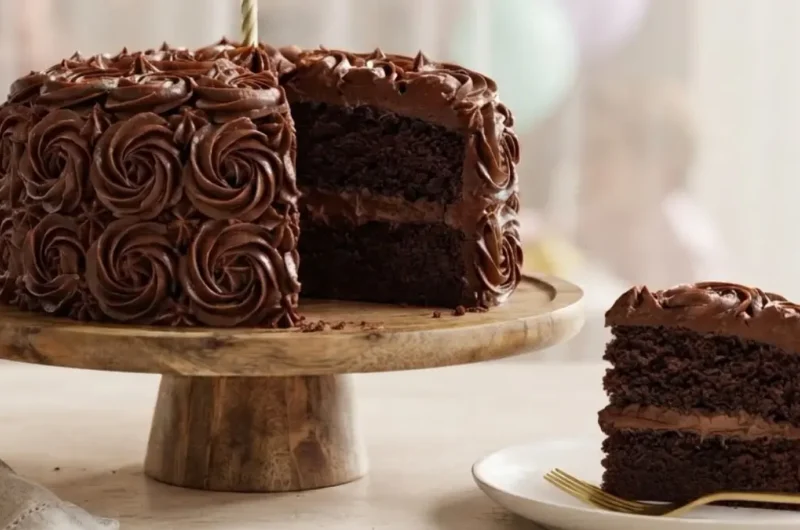
kcalThis is a tall, extra-moist dark chocolate layer cake sweetened with monk fruit instead of sugar. It has a deep cocoa flavor, a tender crumb, and a thick, glossy fudge frosting. It’s rich enough for a birthday table and friendly for anyone watching their sugar.
Keep the screen of your device on
Ingredients
- For the Cake:
2 cups (240 g) all-purpose flour
3/4 cup (75 g) unsweetened cocoa powder, sifted
1 1/2 cups (300 g) granular monk fruit sweetener (1:1 sugar replacement)
2 teaspoons baking powder
1 teaspoon baking soda
1/2 teaspoon fine salt
2 large eggs, room temperature
1 cup (240 ml) buttermilk, room temperature
1/2 cup (120 g) full-fat sour cream
1/2 cup (120 ml) avocado oil
2 teaspoons pure vanilla extract
1 cup (240 ml) hot brewed coffee
- For the Fudge Frosting:
1 cup (226 g) unsalted butter, softened
1 cup (120 g) powdered monk fruit sweetener, sifted
3/4 cup (75 g) unsweetened cocoa powder, sifted
4 ounces (115 g) sugar-free dark chocolate, melted and slightly cooled
1/2 cup (120 ml) heavy cream
2 teaspoons pure vanilla extract
1/4 teaspoon fine salt
Directions
- Prepare the oven and pans: Heat your oven to 350°F (175°C). Grease two 8-inch round cake pans, line the bottoms with parchment paper, and lightly grease the paper. Set the pans aside.
- Mix the dry ingredients: In a large bowl, whisk together the flour, sifted cocoa powder, monk fruit sweetener, baking powder, baking soda, and salt. Whisk for a full minute so the cocoa and leavening spread evenly, with no streaks or lumps left.
- Mix the wet ingredients: In a medium bowl, whisk the eggs, buttermilk, sour cream, avocado oil, and vanilla until smooth and well blended. The mixture should look creamy with no visible streaks of sour cream.
- Make the batter: Pour the wet mixture into the dry ingredients and stir gently until just combined. With the mixer or whisk on low, slowly pour in the hot coffee. The batter will be thin and pourable, which is what keeps the cake moist. Scrape the bottom of the bowl once so no dry flour is left behind.
- Bake the cake layers: Divide the batter evenly between the two pans. Tap each pan on the counter a couple of times to release air bubbles. Bake for 30 to 34 minutes, until a toothpick inserted in the center comes out with a few moist crumbs. Start checking at 28 minutes, since overbaking is the main cause of dry sugar-free cake.
- Cool the layers: Let the cakes cool in the pans for 15 minutes. Run a thin knife around the edges, turn them out onto a wire rack, and peel off the parchment. Let them cool completely, about 30 more minutes, before frosting.
- Beat the butter: For the frosting, beat the softened butter in a large bowl with a mixer on medium speed for 2 to 3 minutes, until pale and creamy. Add the powdered sweetener and cocoa powder a little at a time, mixing on low so it doesn’t puff up around the kitchen.
- Finish the frosting: Pour in the melted chocolate, heavy cream, vanilla, and salt. Beat on medium-high for 2 minutes, until the frosting is thick, glossy, and fluffy. If it’s too soft to spread, chill it for 10 to 15 minutes and stir again. If it’s too stiff, add 1 teaspoon of cream at a time.
- Assemble the cake: Place one cake layer on a plate or cake stand. Spread about one third of the frosting evenly over the top. Set the second layer on top, then cover the top and sides with the remaining frosting, using the back of a spoon to make swirls.
- Rest and slice: Let the cake rest for 20 minutes before slicing so the frosting sets a little. For clean slices, wipe a sharp knife with a warm damp cloth between cuts.
Recipe Notes
- Equipment: You’ll need two 8-inch round cake pans, parchment paper, a mixer (hand or stand), a wire rack, and a toothpick.
- Sweetener choice: Use a granular monk fruit blend measured 1:1 with sugar. Sweetener brands differ in sweetness, so check the label.
- Cooling feeling: Some erythritol blends leave a cool aftertaste. Using an allulose blend or reducing the sweetener by 2 tablespoons can help.
- Dry cake: If your cake turns out dry, it was likely overbaked or the flour was packed into the cup. Weigh the flour if you can.
- Sinking center: Don’t open the oven in the first 25 minutes, and check that your baking powder and soda are fresh.
- Cupcakes: This batter makes about 20 cupcakes. Bake at 350°F for 18 to 20 minutes.
- Sheet cake: Bake in a 9×13-inch pan for 30 to 35 minutes and use the same frosting.
- Gritty frosting: Always use powdered sweetener, and sift it before mixing.
- Decorating idea: For rosettes, chill the frosting for 15 minutes until firm, then pipe it with a large star tip (like Wilton 1M).
Nutrition Facts
| Calories | 430 |
| Total Fat | 34 g |
| Saturated Fat | 17 g |
| Cholesterol | 105 mg |
| Sodium | 390 mg |
| Total Carbohydrate | 32 g |
| Dietary Fiber | 6 g |
| Total Sugars | 3 g |
| Protein | 7 g |
|
Serving size: 1 slice (1/12 of the cake) | Servings per recipe: 12 Nutrition values are estimates and vary by brand. Total carbohydrate includes sugar alcohols from the sweetener. |
|
Frequently Asked Questions
1. Can I use regular sugar instead of monk fruit sweetener?
Yes. Use the same amount of granulated sugar in the cake and powdered sugar in the frosting. The flavor and texture will still work, but it won’t be a sugar-free cake.
2. Why is my sugar-free cake dry?
Sugar holds moisture, so sugar-free cakes dry out faster. The hot coffee, sour cream, and oil in this recipe help, but overbaking still dries it out. Start checking early and take the cake out as soon as the toothpick shows a few moist crumbs.
3. Can I make this cake ahead of time?
Yes. Bake the layers up to 2 days ahead, wrap them tightly, and keep them in the fridge. You can also freeze them for up to 3 months. Frost the cake the day you plan to serve it.
4. Can I make this cake gluten-free?
Yes. Use a good 1:1 gluten-free flour blend that contains xanthan gum. The crumb may be a bit denser, so let the batter rest for 10 minutes before baking.
5. Is this cake keto or diabetic-friendly?
It’s low in sugar, but it isn’t strictly keto because it uses all-purpose flour. Swap in a keto flour blend for a lower-carb version. If you’re managing diabetes, check with your doctor or dietitian about how it fits your plan.